
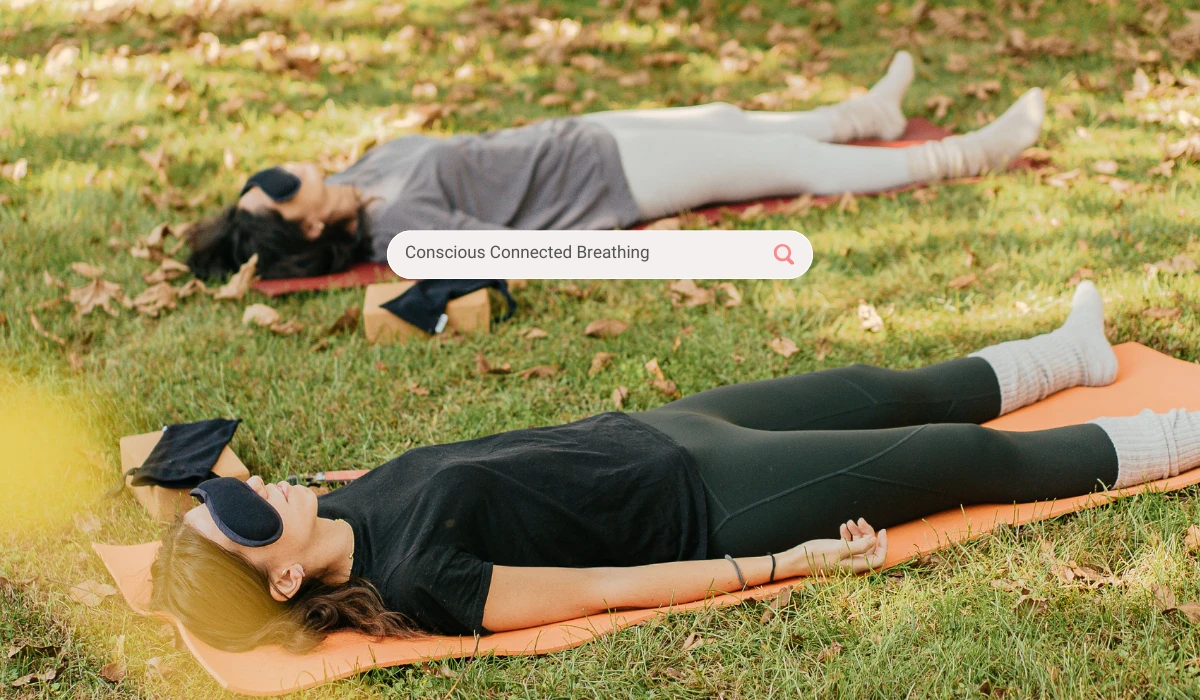
Conscious Connected Breathing (CCB) Explained
December 9, 2025
Conscious Connected Breathing (CCB) is a breathwork practice that involves continuous, rhythmic breathing without pauses between the inhale and exhale. The breath flows in a connected cycle, usually through the mouth, while the practitioner remains consciously aware of physical sensations, emotions, and internal responses.
CCB is used to support emotional release, nervous system regulation, and increased self-awareness. Sessions are typically guided by a trained facilitator and can range from gentle and grounding to deeply experiential.
Most everyday breathing includes natural pauses. Conscious Connected Breathing intentionally removes those pauses, creating a steady rhythm that influences both the nervous system and emotional processing.
Unlike breath practices focused on control or optimization, CCB emphasizes continuity and awareness rather than precision. The goal is not to breathe “better,” but to allow the breath to become a vehicle for release and integration.
Because of its intensity, CCB is usually practiced in a supported setting rather than casually on one’s own.
From a physiological perspective, continuous breathing can temporarily alter blood chemistry and nervous system signaling, which may bring suppressed sensations or emotions into awareness.
This shift can activate the body’s stress response initially, followed by a release phase where the nervous system settles into regulation. Many practitioners describe feelings of emotional clarity, physical lightness, or mental spaciousness after a session.
Responses vary widely. Some sessions feel subtle and grounding, while others can be emotionally cathartic. For this reason, proper facilitation and pacing are important.
CCB is typically guided by a trained breathwork facilitator who creates a safe container for the experience. The facilitator offers verbal cues, monitors breathing patterns, and supports emotional or physical responses that may arise.
This guidance helps ensure the practice remains supportive rather than overwhelming, especially for first-time participants or those working with deeper emotional material.
CCB is often chosen by people who:
It is not always recommended for everyone. Certain medical or psychological conditions may require adaptations or professional guidance, which is why informed facilitation matters.
Conscious Connected Breathing is sometimes confused with hyperventilation. While breathing is continuous, the practice is guided and intentional, with attention to safety and integration.
Another misconception is that intense emotional release is required for the practice to be effective. In reality, benefits can occur even in subtle, gentle sessions.
If you’re interested in exploring Conscious Connected Breathing, Soul Sister helps you find trained facilitators and breathwork sessions offering this modality.
On the Soul Sister platform, you can:
Rather than navigating breathwork blindly, Soul Sister allows you to explore Conscious Connected Breathing by whom it’s facilitated, where it’s practiced, and how others have experienced it, all in one trusted space.
©2026 Soul Sister. All Rights Reserved. Web Design & Development by The Web Addicts.
We use cookies