
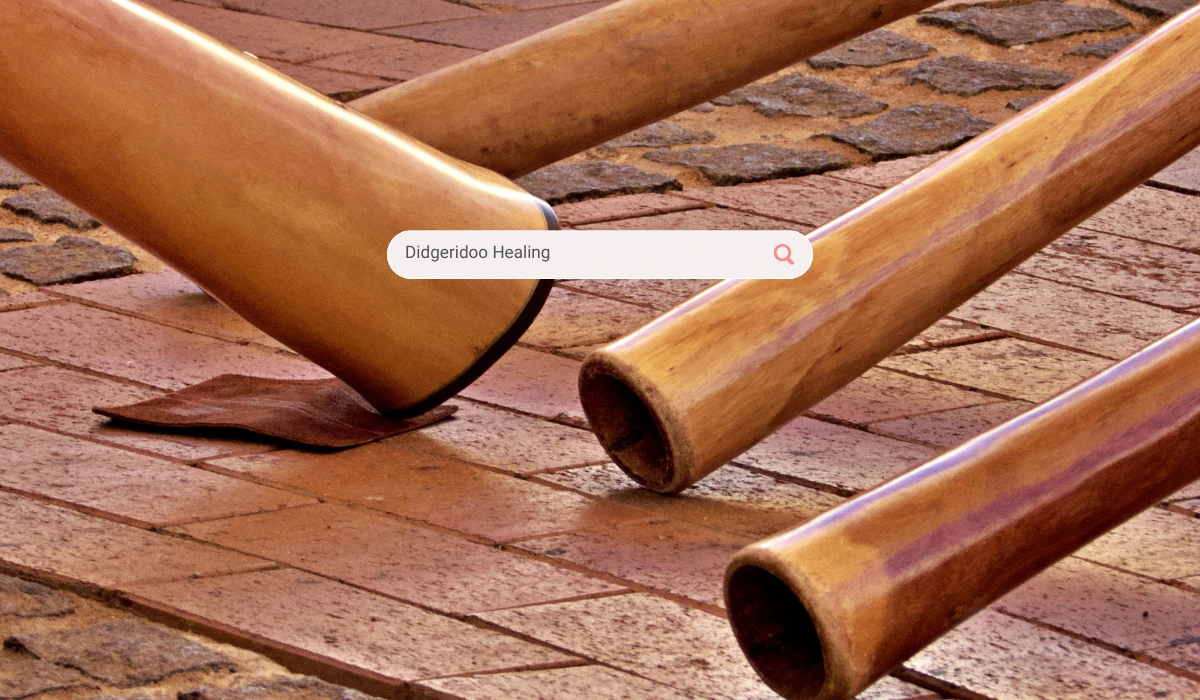
Didgeridoo Healing Explained
December 23, 2025
Didgeridoo healing is a sound-based practice that uses the deep, resonant tones of the didgeridoo to support relaxation, breath awareness, and nervous system regulation. The vibrations produced by the instrument are felt not only through hearing, but physically through the body, creating a multisensory experience.
Traditionally, the didgeridoo is an ancient wind instrument originating from Aboriginal Australian cultures. In contemporary wellness settings, it is sometimes used in therapeutic or meditative contexts for its rhythmic sound and vibrational qualities.
Unlike many sound healing practices that rely on bells, bowls, or recorded audio, didgeridoo healing is breath-driven and continuous. The practitioner uses circular breathing to produce sustained sound, creating a steady, grounding rhythm.
The low-frequency vibrations can be felt deeply in the body, which is why the practice is often described as physically anchoring rather than purely auditory. Sessions may involve the didgeridoo being played around or near the body while the participant remains seated or lying down.
From a physiological perspective, low-frequency sound vibrations may support relaxation by engaging the parasympathetic nervous system. The steady rhythm can help regulate breathing patterns, heart rate, and attention.
Some people report a sense of grounding, emotional release, or mental quiet during or after sessions. As with other sound-based practices, experiences vary depending on sensitivity to sound, volume, and facilitation style.
It’s important to note that while sound can influence mood and perception, didgeridoo healing should be understood as a supportive wellness practice rather than a medical treatment.
A defining feature of didgeridoo healing is circular breathing, a technique that allows continuous airflow without breaks. This creates uninterrupted sound and rhythm, which can feel hypnotic or meditative.
The vibration produced by the instrument can be felt through the floor, air, or direct proximity, engaging the body in a way that is both calming and grounding.
Didgeridoo healing often appeals to people who:
It is commonly explored as part of sound healing sessions, meditation events, or integrative wellness experiences.
Didgeridoo healing is sometimes mistaken for performance or entertainment rather than a therapeutic experience. In a healing context, the focus is on rhythm, tone, and intentional listening rather than musical complexity.
Another misconception is that louder sound produces better results. In practice, volume, pacing, and sensitivity to the participant matter more than intensity.
If you’re interested in exploring didgeridoo healing, Soul Sister helps you find sound practitioners and facilitators offering this modality.
On the Soul Sister platform, you can:
Rather than searching randomly, Soul Sister allows you to explore didgeridoo healing by whom it’s practiced, where sessions are offered, and how others have experienced it, all in one trusted space.
©2026 Soul Sister. All Rights Reserved. Web Design & Development by The Web Addicts.
We use cookies