Mandala Art Therapy Explained
January 20, 2026
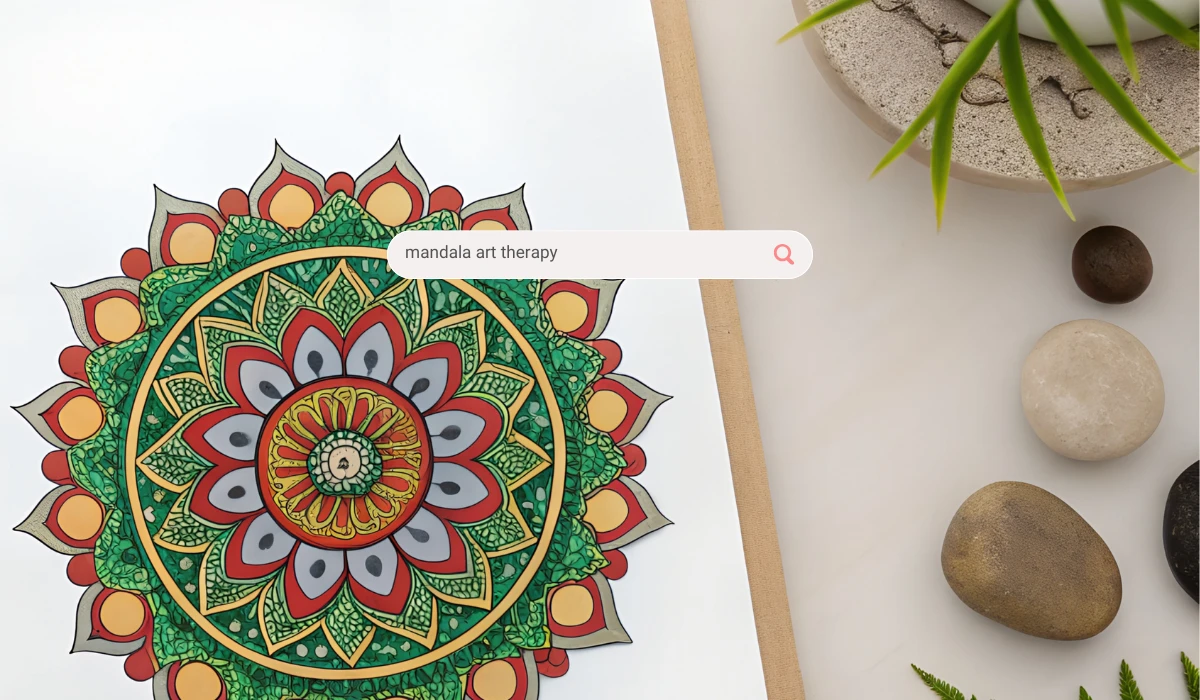
At its core, mandala art therapy is the practice of creating or coloring circular designs as a way to support mental and emotional well-being. The process is meditative, intuitive, and deeply personal.
You might be given a blank circle and invited to draw whatever feels right. Or you might color a pre-made mandala, choosing shades without thinking too hard about “why.” There’s no goal to achieve and no final product to judge. What matters is what happens while you’re creating.
As your attention settles into the repetition of shapes and colors, the mind naturally quiets. Thoughts slow down. Emotions soften. Many people describe feeling grounded, centered, or gently “held” by the circle itself.
Circles are everywhere in nature—sunflowers, tree rings, planets, the human eye. The brain recognizes this shape as familiar and safe.
From a psychological perspective, circular forms help create a sense of containment. When emotions feel scattered or overwhelming, working inside a circle can feel stabilizing, almost like placing boundaries around chaos.
This is one reason mandala art therapy is often used for anxiety, stress, and emotional regulation. The structure of the circle offers support, while the freedom inside it allows for expression.
The modern therapeutic use of mandalas was strongly influenced by Carl Jung, who observed that people naturally created circular images during periods of inner change. He believed mandalas reflected the mind’s attempt to restore balance and order.
You don’t need to analyze your mandala through a psychological lens for it to be effective. Still, many people notice patterns over time—more open designs when they feel calm, tighter or darker ones during stress. These shifts aren’t problems to fix. They’re signals to notice.
A typical mandala art therapy session is simple and unstructured.
You sit down with paper, colors, and a bit of quiet time. As you begin, your mind might feel busy or restless. That’s normal. After a few minutes of drawing or coloring, attention often moves from thinking to sensing—the movement of your hand, the blending of colors, your breath.
Some sessions feel soothing. Others may bring emotions to the surface. Both are valid. Mandalas don’t force relaxation; they create space for whatever needs to be acknowledged.
People often ask what certain colors or shapes “mean” in mandala art therapy. While general associations exist, there are no fixed rules.
The most important meaning is always the one you feel. In therapy settings, reflection is gentle and led by the creator, not imposed by interpretation charts.
Mandala art therapy is widely used because it’s accessible to almost everyone.
You don’t need artistic skill, spiritual beliefs, or prior experience. If you can hold a pencil or tap a screen, you can practice mandala art therapy.
One of the most beautiful things about mandala art therapy is how easy it is to practice on your own.
All you need is:
Start small—10 or 15 minutes is enough. Let the process guide you. When you feel calmer or more centered, that’s your cue to stop. There’s no need to “finish” the mandala unless you want to.
Many people return to the same mandala over several days, letting it evolve with their mood.
Digital mandala apps and tablets offer convenience and endless design options. Hand-drawn mandalas provide a tactile, sensory experience that some people find more grounding.
Neither is better. What matters is whether the process helps you slow down and connect with yourself.
It’s easy to assume mandala art therapy is:
In reality, its simplicity is exactly what makes it powerful. When the mind isn’t busy performing or achieving, it can finally rest—and sometimes heal.
Is mandala art therapy the same as coloring for relaxation? It can be, but therapy focuses more on awareness and emotional expression than just distraction.
How often should I practice? Even once or twice a week can be helpful. Some people enjoy daily sessions.
Can mandalas bring up difficult emotions? Yes, sometimes. If that happens, slow down and offer yourself compassion.
Do I need a therapist to benefit? No. While therapists guide deeper work, personal practice is still valuable.
Is there a right way to do it? No. Your way is the right way.
Can children do mandala art therapy alone? Yes, with gentle guidance and no pressure to explain their artwork.
Mandala Art Therapy Explained ultimately comes down to this: sometimes healing doesn’t happen through fixing or analyzing—it happens through creating, noticing, and allowing yourself to be exactly where you are.
In a world that constantly pulls attention outward, mandalas gently guide it back in. One circle. One breath. One moment of presence at a time.
If mandala art therapy—or any form of emotional healing—resonates with you, finding the right support matters. That’s where Soul Sister can make a meaningful difference. Soul Sister helps you discover trusted, relevant therapy options around you, with clear details about practitioners, approaches, and support styles—so you don’t have to search blindly or feel overwhelmed.
Healing is deeply personal, but you don’t have to navigate it alone. Whether your journey begins with a pencil and a circle or with professional guidance, having the right support can turn quiet moments of reflection into lasting transformation.
©2026 Soul Sister. All Rights Reserved. Web Design & Development by The Web Addicts.
We use cookies