
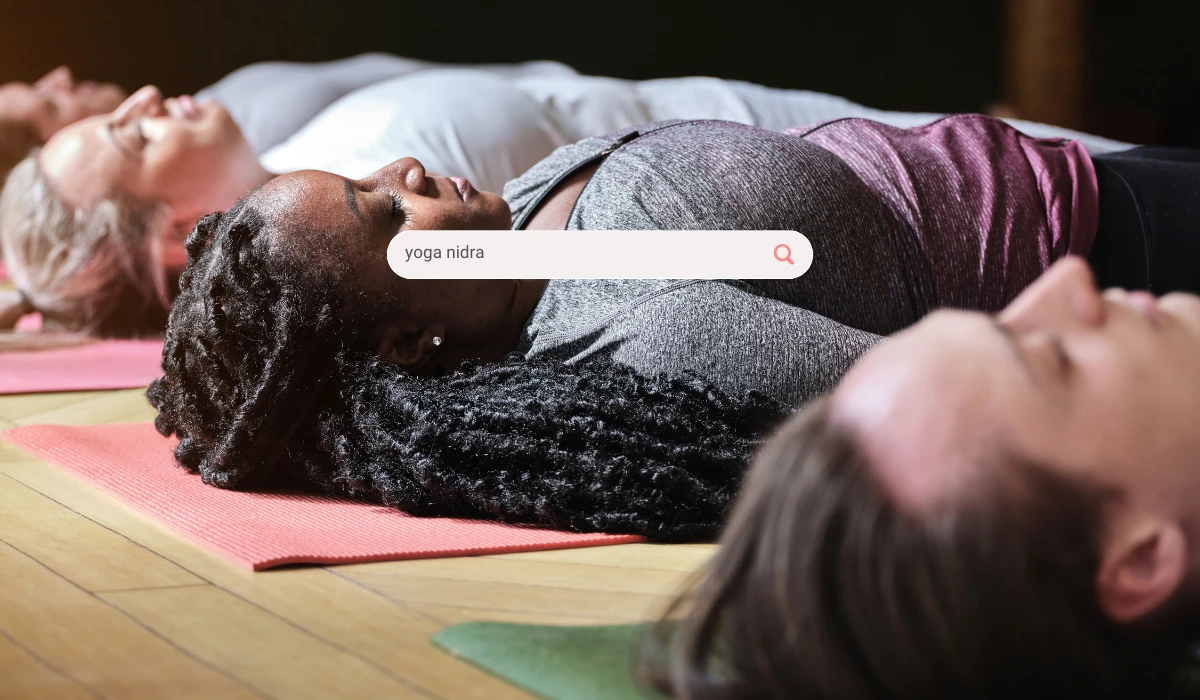
Yoga Nidra Explained
November 25, 2025
Yoga Nidra, often called yogic sleep, is a guided meditation practice that leads the body into deep relaxation while the mind remains aware. Practiced lying down, Yoga Nidra systematically guides attention through the body, breath, sensations, and imagery, allowing the nervous system to shift into a deeply restorative state.
Despite the name, Yoga Nidra is not sleep. It is a state between waking and sleeping where the body rests profoundly and the mind stays gently alert.
Unlike seated meditation practices, Yoga Nidra is typically done lying on the back, making it accessible to people who find stillness or posture challenging.
The practice follows a structured verbal guidance, often including body scanning, breath awareness, and visualization. There is no effort to control thoughts or achieve a particular state. If attention drifts or sleep occurs, it is considered part of the process rather than a failure.
Yoga Nidra is often used for deep rest, stress recovery, emotional regulation, and nervous system support.
Yoga Nidra activates the body’s parasympathetic nervous system, the part responsible for rest, repair, and recovery. Research suggests that even short sessions can support stress reduction, improved sleep quality, and mental clarity.
Because the body enters a state similar to deep sleep while consciousness is maintained, the practice is sometimes described as providing the restorative benefits of sleep without unconsciousness.
Experiences vary, but many practitioners report feeling grounded, refreshed, and mentally clear after regular practice.
A common element of Yoga Nidra is the use of a sankalpa, or personal intention. This is a short, simple statement introduced at specific points during the practice.
The intention is not an affirmation in the usual sense. It is planted when the mind is relaxed and receptive, allowing it to settle below habitual thought patterns. Not all Yoga Nidra sessions emphasize intention equally, and some focus purely on relaxation and awareness.
Yoga Nidra is widely practiced by people seeking:
It is commonly used by beginners and experienced practitioners alike, and is often integrated into therapeutic, wellness, and trauma-informed settings.
Yoga Nidra is sometimes mistaken for a nap or passive relaxation. While sleep may happen, the practice itself is designed to cultivate awareness within rest.
Another misconception is that Yoga Nidra requires spiritual belief or yogic background. In reality, it can be practiced in a completely secular and therapeutic context.
If you’re interested in exploring Yoga Nidra, Soul Sister helps you discover qualified teachers, classes, and guided sessions offering this modality.
On the Soul Sister platform, you can:
Rather than searching endlessly, Soul Sister allows you to explore Yoga Nidra by whom it’s taught, where it’s practiced, and how others have experienced it, all in one trusted space.
©2026 Soul Sister. All Rights Reserved. Web Design & Development by The Web Addicts.
We use cookies